Thursday, 9 July 2015

Between the Covenants: God and The Law

“If you obey all the rules you miss all the fun” (Katharine Hepburn) 
"Break the rules, find your freedom, live your life" (Unknown)
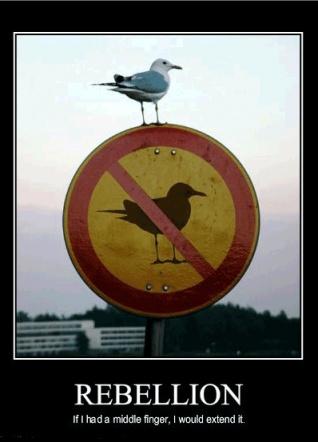

There is a perception that rules are oppressive, regressive, and restrict ‘fun’. And indeed, there have been many rules put in place by tyrants and dictators that have been put in place to ‘legalise’ and enforce oppression of a powerless people. Think of the ‘treason laws’ of the medieval Kings, Nazi Germany’s anti-Jewish laws, and Australia’s White Australia Policy. And it is possible that because of this history, people are reluctant to submit to rules that restrict their ‘freedom.’ But I believe that the rebellious nature of people this side of the fall, the ‘flesh’ demanding its own way that rebels against God, is what motivates much of this attitude. That was the serpent’s line to Eve, ‘God is trying to limit your fun and potential with His rules.’ She and Adam believed it, and we've inherited it.

There are degrees of this even within Christians, they may not articulate it as such, but the way their understanding of the doctrine of grace reveals their attitude towards the Law is telling. And to be fair, they have perhaps inherited either a Protestant  rebellion against a salvation by works, or rejecting the 1950’s style of fear-based-legalism that dominated the church. They perceive that the Law is a burdensome slave driver, and therefore the Christian should have no regard for it any more because we have been ‘set free’ from it. They often point to the words of the Apostles to the Gentiles in Acts 15:28: “It seemed good to the Holy Spirit and to us not to burden you with anything beyond the following requirements…” But is this perception correct? In part 2 of Between the Covenants (see part 1 of Between the Covenants here), we will be seeking to answer the question: Is the Law given through Moses something burdensome and negative that we should seek to be free from?

Law as Torah, not Slavery

The Hebrew word for Law, is Torah which means teaching, or instruction. Thus, when Moses was given the Law, God was not demanding, but rather instructing his people on how they are to live as His covenant people, and inviting them to wholeness, or shalom. This is seen in how obedience of God’s Torah would lead to life and blessing, as Moses said; “keep the commandments of the Lord and His statutes which I command you today for your good (Deut 10:13). That God made His instructions known is indeed an act of grace and kindness, and His rules were intended to help them live in the freedom of all they were created for as they said ‘no’ to sin, and ‘yes’ to righteousness. In fact, as Spurgeon said: “There is nothing in the law of God that will rob you of happiness; it only denies you that which would cost you sorrow.” So the Law is not about slavery. As John said “his commands are not burdensome” (1Jn 5:3). This is reflective of Deuteronomy 30:11; “Now what I am commanding you today is not too difficult for you or beyond your reach.”

Interestingly, Torah Resources explains that the 
“Hebrew word, torah, is derived from a root that was used in the realm of archery, yareh. Yareh means to shoot an arrow in order to hit a mark… Consequently, torah, one of the nouns derived from this root, is, therefore, the arrow aimed at the mark, the target is the truth about God and how one relates to Him. The torah is, therefore, in the strict sense instruction designed to teach us the truth about God.”

The Law makes God Known

It is important to remember that the Law given through Moses is a revelation of God Himself. This is why in Jeremiah 31:34, after God said He would write His law on His people’s hearts in the New Covenant, He said “No longer will they teach their neighbour, or say to one another, ‘Know the Lord,’ because they will all know me…” Also in Jeremiah 4:22 He said: “My people are fools; they do not know me. They are senseless children; they have no understanding. They are skilled in doing evil; they know not how to do good.” And this isn't just an Old Testament thing. John wrote: “Whoever says “I know him” but does not keep his commandments is a liar, and the truth is not in him… (1Jn 2:4). And elsewhere, “Everyone who believes that Jesus is the Christ has been born of God, and everyone who loves the Father loves whoever has been born of him. By this we know that we love the children of God, when we love God and obey his commandments. For this is the love of God, that we keep his commandments” (1Jn 5:1-3).

Since, as discussed above, the Law is a revelation of God, if we say that the Law is not important we are saying that God is not important. And the extent of that importance is one measure of our sanctification. Thus, our relationship to the Law reflects our relationship with God, as Erickson explains, “When we relate to [the Law], whether positively or negatively, we are not relating to an impersonal document or set of regulations. Rather it is God himself whom we are obeying or disobeying” (820). Thus, to know the Law, is to know God.

A significant part of this revelation is the Holiness of God. Often throughout the Law God told His people to obey His commands so that they would “Be holy because I, the Lord your God, am holy.” This ties into God’s righteousness, as Paul wrote, “But now apart from the law the righteousness of God has been made known” (Rom 3:21). Implicit in this statement is that before the crucifixion of Jesus, it was the Law that revealed the righteousness of God. This does not mean that the Law no longer reveals the righteousness of God, but rather that the Gospel reflects it more fully. Thus, “The righteousness of God means, first of all, that the Law of God, being a true expression of his nature, is as perfect as he is” (Erickson 313). This is why the Psalmist could write: “The law of the Lord is perfect, refreshing the soul. The statutes of the Lord are trustworthy, making wise the simple. The precepts of the Lord are right, giving joy to the heart” (Ps 19:7-8). The reason the Law can do these things, is because God does these things in the lives of His people. The reason the Law is perfect, or tamiym (Strongs #8552, complete, sound, wholesome, unimpaired, having integrity, in accord with truth and fact), is because God is tamiym. 


What about the Jerusalem Council?

So, what about that Acts 15 passage mentioned above? Isn't that describing the Law as burdensome upon Gentile Christians? Didn't they decide Gentiles don't have to worry about the Law? 
Firstly, to make this conclusion would deny other passages that describe the law as good (discussed below) and a relevant part of the new covenant such as Jeremiah 31 (I will be dealing with Paul's words such as Romans 6:14 in a future post). Secondly, the context of that passage was a response to Judaisers teaching that one must be circumcised and keep the Law of Moses in order to be saved. And so the burden in view keeping the Law for salvation, not righteous living. This becomes clear from Peter’s words at the Jerusalem council: “Now, therefore, why are you putting God to the test by placing a yoke on the neck of the disciples that neither our fathers nor we have been able to bear? But we believe that we will be saved through the grace of the Lord Jesus, just as they will” (15:10). And thirdly, the instruction to abstain from “things polluted by idols, and from sexual immorality, and from what has been strangled, and from blood” (15:20), are actually based on the Mosaic Law. As reiterated by James, “For from ancient generations Moses has had in every city those who proclaim him, for he is read every Sabbath in the synagogues” (15:21). So the Jerusalem council was about affirming Gentiles as belonging to the New Covenant people of God by faith apart from circumcision and obedience to the Law, just as it was for the Jews, and not about saying the Law is irrelevant for Gentiles.

What about beyond Sinai?

Does this mean that before the Law was given through Moses, that God’s righteousness and morality were unknown? We find something interesting in God’s words to Isaac: 
“And in your offspring all the nations of the earth shall be blessed, because Abraham obeyed my voice and kept my charge (mismarti), my commandments (miswotay), my statutes (huqqotay), and my laws (wetorotay) (Genesis 26:4-5). 
What makes this phrase particularly significant is how Moses uses a similar phrase with the same Hebrew words in Deuteronomy 11:1, "Love the Lord your God and keep his requirements (mismarti), his decrees (huqqotay), his laws (miswotay) and his commands (miswotay) always.” This means that prior to Moses, God’s Law was known and obeyed by His people, and therefore “…the Ten Commandments do not so much introduce new standards of behaviour as codify the relationship that God’s covenant people are supposed to have with him” (Carson, 63).

Paul explains that the Law is made known in the Gentiles conscience:
“For when Gentiles, who do not have the law, by nature do what the law requires, they are a law to themselves, even though they do not have the law. They show that the work of the law is written on their hearts, while their conscience also bears witness, and their conflicting thoughts accuse or even excuse them on that day when, according to my gospel, God judges the secrets of men by Christ Jesus” (Rom 2:14-16).
What Paul is talking about here is those who do not have the Law in the written format, will still be judged according to the Law’s righteous requirement because God has written it on their conscience.

The Blessings of the Law

Considering the universality of God’s Law, the Law is still a blessing for us today and not just Israel at Sinai. If the Law is a revelation of God’s moral character, then the law serves to define sin. As Paul wrote in Rom 7:7, “… I would not have known what sin was had it not been for the law. For I would not have known what coveting really was if the law had not said, ‘You shall not covet.’” And John clarifies this further in 1John 3:4 “Everyone who sins breaks the law; in fact, sin is lawlessness.” Thus without the Law, we would have no knowledge of sin, and no knowledge of our need for forgiveness and salvation. This is especially true since, as discussed above, both sin (miss the mark) and Torah, have etymological origins in archery. So, if the Law no longer exists then there is no more sin. And if there is no more sin, then what are we calling people to repent from and why would they need a saviour?

On the flip-side of this, and more importantly, the Law also serves to instruct God’s people in righteousness. Knowing Christ has atoned for our sins, we should come to the Law no longer primarily focusing on how it defines sin and feeling condemned by where we have fallen, but rather focusing on how it defines righteousness and empowered by the Holy Spirit, seeking to live out the righteousness we have inherited from Christ (2Cor 5:21). As Paul wrote to Timothy: “All Scripture [including the Law] is God-breathed and is useful for teaching, rebuking, correcting and training in righteousness” (2Tim 3:16). Similarly, John Calvin positively considered the principal and proper purpose of the law to be “’to learn more thoroughly each day the nature of the Lord’s will to which they aspire, and to confirm them in the understanding of it’ (Institutes 2.7.12)” (Beach-Verhey 474).

As I will explore more in depth in a future post, the Law can be burdensome, depending on how one relates to it. If we are relying on obedience to the Law for salvation, and God’s love and favour, it will become burdensome. But when viewed through the lens of the Gospel, it becomes a thing of delight. As Keller explains in his commentary on Galatians: 
“… the more you see your own flaws and sins, the more precious, electrifying, and amazing God’s grace appears to you. But on the other hand, the more aware you are of God’s grace and acceptance in Christ, the more able you are to drop your denials and self-defences and admit the true dimensions and character of your sin. This also creates a new dynamic for discipline and obedience… it makes the law of God a thing of beauty instead of burden. We can use it to delight and imitate the one who has saved us rather than to get his attention or procure his favour.”
This motive of delight and love is what John wrote about. When we come to know the goodness, beauty, love, and majesty of God and make them the foundation of our obedience we can avoid legalism, and burdensome slavery.

We do well to consider the Law not as an impersonal and burdensome list of do and do nots, but an invitation from a loving creator and Father to life and blessing. And considering this, along with the way the Law is a revelation of a holy, perfect, and loving God, it stands to reason that the Law is something that we should be paying attention to rather than rejecting. For, if “the Law is perfect, refreshing the soul”, why would we abandon it and why would God remove it?

In my next post, I will be exploring the topic of Jesus and the Law, namely what He said about it and how He fulfilled it, as the next step in gaining a more accurate perspective of how the Law relates to us as the New Covenant people of God.


Hymn: Teach me, O Lord, your way of truth, 

Teach me, O Lord, your way of truth, 
and from it I will not depart; 
that I may steadfastly obey, 
give me an understanding heart. 

In your commandments make me walk, 
for in your law my joy shall be; 
give me a heart that loves your will, 
from discontent and envy free. 

Your word sheds light upon my path; 
a shining light, it guides my feet; 
your righteous judgements to observe, 
my solemn vow I now repeat. 

Your wondrous testimonies, Lord, 
my soul will keep and greatly praise; 
your word, by faithful lips proclaimed, 
to simplest minds the truth conveys. 

I thirst for your commandments, Lord, 
and for your mercy press my claim; 
O look on me and show the grace 
displayed to all who love your name. 


References:

Beach-Verhey, “Law, Uses of”, Dictionary of Scripture and Ethics. Baker: Grand Rapids (2011). 474

Carson, Don. The God Who is There: Finding Your Place in God’s Story. Baker: Grand Rapids (2010).

Erickson, Millard. Christian Theology. Baker: Grand Rapids (2009).

http://www.ucg.org/bible-study-tools/booklets/the-new-covenant-does-it-abolish-gods-law/did-abraham-keep-the-same


http://www.sermonindex.net/modules/articles/index.php?view=category&cid=650

http://www.hymnary.org/text/teach_me_o_lord_thy_way_of_truth

Monday, 29 June 2015

Between the Covenants: Grace and Works

With The SCOTUS recently approving same-sex marriage, the topic of relationships and divine law has become a very common topic of discussion. My experience on social media has encountered 4 key discussions. The majority, as they display with their ‘celebrate-pride rainbow filter’ on their profile picture, are celebrating. A minority are expressing their disgust and prophesying doom over the USA. And from Christians, many are pointing out that not only are we a secular nation, but there is no mandate to creation one in the great commission. And others, like myself, are displaying the rainbow with some reference to Gen 9:13: I have set my rainbow in the clouds, and it will be the sign of the covenant between me and the earth. (Indeed, the rainbow is a sign of grace and mercy, and not a symbol of pride). And so I thought I would explore the nature of the covenants, and the relationship between grace and works

What is a Covenant? 

Covenant is a word used often in the church and theological discussion, but sometimes with only a vague understanding of its meaning. Wayne Grudem defines covenant, in the biblical sense, as: “an unchangeable, divinely imposed legal agreement between God and man that stipulates the conditions of their relationship” (515). Being an unchangeable agreement means that humanity can never negotiate the terms, it basically comes down to ‘do you accept them or not.’ So a covenant is different to a contract, as evident by how the Greek translation of the Old Testament (Septuagint, or LXX) and the New Testament authors chose the less common term diatheke (testament, will, stipulations laid down by one party), rather than the more common syntheke (negotiated contract). Matt Chandler uses marriage to explain the difference:
“They don't turn and face one another and go, ‘I'm in this as long as you mow the lawn.’ ’Well I'm in this as long as you clean the dishes after we have dinner.’ ‘Well I'll do the dishes if you make enough money for us to go out to eat every once in a while so I don't have to slave in the kitchen all the time.’… In a covenant, we don't barter around services… We're entering into a relationship in such a way that we give ourselves to one another”

So a contract is a conditional relationship, but a covenant is a sacrificial relationship based on promises. And therefore when God enters a covenant with people, it is by grace.

How the Covenants Relate

There are a number of covenants mentioned in the Bible. The key ones are:
Adamic: made with Adam and Eve in the Garden (Gen 1:28-30, 2:16-17) as God’s ideal pattern of relationship with humanity,
Abrahamic: promise of land, children, and blessing through faith in the promises of God (Gen 12:1-3, 15:13-21, 17:1-14),
Mosaic: redemption of descendant of Abraham as His special people through faith in the blood of the Passover lamb (Ex-Deut), and
Messianic: redemption of humanity as His special people through faith in the blood of Jesus, the Messiah (Lk 22:20, Jn 3:16-21, Rom 1-11)

There are a variety of views of the relationship between the various covenants, which can be summed up into two major categories: Dispensationalism, and Covenant Theology. These are more about hermeneutics than theology per-se (gotquestions), but a hermeneutic based on theology nonetheless.
Dispensationalism focuses on the differences between 7 “distinguishable Dispensations or administrations of God’s purposes, will, and relationships with people in general and particularly his people” (Ware). And therefore, although some overlap may be recognised, there is a strong distinction between the Old and New covenants as well as the church and Israel.

Covenant Theology, on the other hand, focuses more on the continuity of the covenants and categorises them as being either a covenant of works, or a covenant of grace. The Covenant of Works is said to have been set in the Garden between Adam and Eve: “God sets Adam in the Garden and promises eternal life to him and his posterity as long as he is obedient to God’s commands. Life is the reward for obedience, and death is the punishment for disobedience.” However, because Adam failed to uphold the covenant of works, a Covenant of Grace was needed whereby “God freely offers to sinners (those who fail to live up to the CW) eternal life and salvation through faith” (gotquestions). This kind of approach sees the relationship between the two covenants as: ‘the old is the new concealed, and the new is the old revealed.’ Moreover, Israel and the church are seen as the same. These are just generalised, summary definitions and I am aware that there is a greater complexity to them. I am also aware that some may define them slightly differently, and that there are those who don’t sit exclusively in one camp or another. But for the purposes of this blog, these explanations should suffice.

My reading of the bible suggests to me that there is a significant continuity between the covenants, and this continuity is found in: God’s intention for humanity, God’s character, and our response to God’s character.

Beginning in the Garden, it was intended by God that humanity walked in shalom with Him; loving Him, trusting Him, and faithfully reflecting His Holy image. Yet, because of sin, God needed to redeem humanity from the fall and promised in Genesis 3:15 that a descendant would fulfil this purpose. And all the covenants God made with people pointed to this saviour being fulfilled in the person and work of Christ who established the New Covenant. Although Covenant Theology distinguishes them, I have found that all covenants have both a works and grace component. There was an aspect of grace in the Garden as God chose to establish a relationship with them, before they had even done anything. It’s just that because of sin that in the latter covenants, grace has a greater emphasis as well as a different basis and form. And when it comes to the Messianic covenant, although we are saved and forgiven by grace through faith (Rom 3:21-24), our response to that grace is worship and obedience (Rom 12:1-2, Eph 2:10). Both Paul and James use Abraham as an example of this since, although God established his covenant with Abram because of faith (Gen 15:6, Rom 4:1-12), Abram's faith was proved through his obedience. As James explains: “Was not Abraham our father justified by works when he offered up his son Isaac on the altar? You see that faith was active along with his works, and faith was completed by his works; and the Scripture was fulfilled that says, ‘Abraham believed God, and it was counted to him as righteousness’—and he was called a friend of God” (Js 2:21-23).

Grace and Works

This passage opens much debate between faith, works, and salvation as people try to keep both Paul and James in tension. This is particularly true when it comes to witnessing a Gospel of Grace to groups such as Jehovah’s Witnesses and Mormons who hold to a conditional/works based Gospel (God will only save you if you obey), who use James to argue this. They fail to understand that works are the ‘fruit’ not ‘root’ of our salvation. And because we are so enamoured with God’s grace, our opposition to a works-based salvation, and protestant heritage, we tend to irk at the mention of works and Law, seeing them as enemies of the Gospel. Indeed, it is often seen as a thing of slavery and burden, as reflected in the opening verse of the hymn, ‘Free from the Law’:

Free from the law—oh, happy condition!
Jesus hath bled, and there is remission;
Cursed by the law and bruised by the fall,
Christ hath redeemed us once for all.

The Law given through Moses is often understood as a Works Covenant, however, as Exodus and Deuteronomy tell us, one finds that obedience was a response to God’s work of redemption, not a condition. At the beginning of the Ten Commandments, God declared: “I am the Lord your God, who brought you out of the land of Egypt, out of the house of slavery” (Ex 20:1), and then proceeded to give the Law. An implicit conjunction between verse 1 and 2 is ‘therefore’. Thus, God is saying: ‘Since you are my people, this is how I would like you to act.’ And that God chose these people by grace is evident by the declaration:
“For you are a people holy to the Lord your God. The Lord your God has chosen you to be a people for his treasured possession, out of all the peoples who are on the face of the earth. It was not because you were more in number than any other people that the Lord set his love on you and chose you, for you were the fewest of all peoples, but it is because the Lord loves you and is keeping the oath that he swore to your fathers, that the Lord has brought you out with a mighty hand and redeemed you from the house of slavery, from the hand of Pharaoh king of Egypt” (Deut 7:6-8).

This is not much different to the New Covenant. As Paul explains in Romans: “I appeal to you therefore, brothers, by the mercies of God, to present your bodies as a living sacrifice, holy and acceptable to God, which is your spiritual worship” (Rom 12:1), (and) “For while we were still weak, at the right time Christ died for the ungodly. For one will scarcely die for a righteous person—though perhaps for a good person one would dare even to die— but God shows his love for us in that while we were still sinners, Christ died for us” (Rom 5:6-8).

Difference and Continuity

So what exactly then, is the difference between the Old and New Covenant? One popular view is that we are now under the Law of Christ and that the Law of Moses has been done away with. Indeed, this appeals to many Protestant Christians today for the reasons mentioned above.  Proponents of this view will often refer to Colossians 2:14, in particular from the King James Version, “Blotting out the handwriting of ordinances that was against us, which was contrary to us, and took it out of the way, nailing it to his cross.” Another is from Hebrews 8:13, “In speaking of a new covenant, he makes the first one obsolete. And what is becoming obsolete and growing old is ready to vanish away.” Prior to this verse is a quotation of Jeremiah 31:31-34, which contains both points of difference and continuity.
“Behold, the days are coming, declares the Lord, when I will make a new covenant with the house of Israel and the house of Judah, not like the covenant that I made with their fathers on the day when I took them by the hand to bring them out of the land of Egypt, my covenant that they broke, though I was their husband, declares the Lord. For this is the covenant that I will make with the house of Israel after those days, declares the Lord: I will put my law within them, and I will write it on their hearts. And I will be their God, and they shall be my people. And no longer shall each one teach his neighbour and each his brother, saying, ‘Know the Lord,’ for they shall all know me, from the least of them to the greatest, declares the Lord. For I will forgive their iniquity, and I will remember their sin no more.”
The points of difference are found in the supremacy of the New Covenant, which is fitting considering that its context in Hebrews is the author describing how the New Covenant is superior to the Old on the basis of its promises and sacrifice (Heb 8:1-7). First, we have the Lord explaining that the New Covenant won’t be like the Mosaic covenant because “of the lack of faithfulness to the covenant on the part of its recipients” (Guthrie, 971). And second, the remedy to this problem with the Old Covenant is in how instead of the people having to rely on external commands written on stone, they will be written on their hearts and minds. The combination of these two points results in a deeper intimacy and knowledge of God, made possible by a once-for-all forgiveness.

But, note two points of continuation. Firstly, the New Covenant is not made with the nations (Strongs #1472: goyim, Gentiles) but with Israel, consisting of the two Kingdoms (1Kg 12): the House of Judah and the House of Israel. And just like under the Old Covenant, the Gentiles are grafted by faith in Jesus, into Israel: the people of God. Like Ruth we say to ‘Naomi’: “Your people shall be my people, and your God my God.” Paul talks about this two places. One in Romans 11:17-18, 23-24:
But if some of the branches were broken off, and you, although a wild olive shoot, were grafted in among the others and now share in the nourishing root of the olive tree… And even they, if they do not continue in their unbelief, will be grafted in, for God has the power to graft them in again. For if you were cut from what is by nature a wild olive tree, and grafted, contrary to nature, into a cultivated olive tree, how much more will these, the natural branches, be grafted back into their own olive tree.
The other in Ephesians 2:12-13
…remember that you were at that time separated from Christ, alienated from the commonwealth of Israel and strangers to the covenants of promise, having no hope and without God in the world. But now in Christ Jesus you who once were far off have been brought near by the blood of Christ.
And so, the first point of continuation is that God is making a covenant with Israel, and invites the nations to be His people (2Cor 6:16). This becomes evident in Peters declaration that we as followers of Christ, “are a chosen race, a royal priesthood, a holy nation, a people for his own possession, that you may proclaim the excellences of him who called you out of darkness into his marvellous light”(1 Pet 2:9-10). These words aren’t unique to the New Covenant people of God, but also used to describe the Old Covenant members too: “Now therefore, if you will indeed obey my voice and keep my covenant, you shall be my treasured possession among all peoples, for all the earth is mine; and you shall be to me a kingdom of priests and a holy nation” (Ex 19:5-6). Although dispensationalists may disagree, suggesting that the church has replaced Israel, there is some truth to this. God’s people in the Old Covenant were a geopolitical entity, but we are now a people of faith. But there is continuity here too, as Paul explains to the Galatians: “Know then that it is those of faith who are the sons of Abraham. And the Scripture, foreseeing that God would justify the Gentiles by faith, preached the gospel beforehand to Abraham, saying, ‘In you shall all the nations be blessed.’ So then, those who are of faith are blessed along with Abraham, the man of faith” (Gal 3:7-9). Therefore, belonging to the people of God has always been by faith. And in the future, in the New Heavens and Earth, God’s people will reign on Earth under their King.

The second is continuity of God’s Law. As mentioned above, God declared in Jeremiah 31 that He would write His Law on the New Covenant member’s heart and mind. One might suggest that this is the same Law as the one given through Moses, especially since the reason He writes it on our heart, is that the Old Testament people couldn’t keep it. As Jesus said, the Two Great Commandments, “You shall love the Lord your God with all your heart and with all your soul and with all your strength and with all your mind, and your neighbour as yourself” (Lk 10:27), which is referred to as the Law of Christ (Gal 6:2) (gotquestions), is not only the foundation of the Law and the Prophets (Matt 22:40), but also quotations from the Mosaic Law (Deut 6:5, Lev 19:18). What the Law looks like in the New Covenant is debated and complex, and will begin to be explored in the next blog, but as this point it should suffice to conclude that there is some continuity of the Law given through Moses under the New Covenant.

Partnership of Grace and Works

So grace and works are not the two opposing concepts they are made out to be, when partnered together in the right way, create a beautiful covenant of Life and blessing. It was true of Abraham, Noah, Moses, and David, and it is true for us today. But this side of the fall, as Titus 3:5-7 tells us, “He saved us, not because of works done by us in righteousness, but according to his own mercy, by the washing of regeneration and renewal of the Holy Spirit, whom he poured out on us richly through Jesus Christ our Saviour, so that being justified by his grace we might become heirs according to the hope of eternal life.” This side of the fall, works cannot justify us. Our works cannot make us righteous. To try and establish a righteousness by works is not only a self-righteousness that is offensive to God, but also, as Paul warned the Galatians, “You are severed from Christ, you who would be justified by the law; you have fallen away from grace.” But rather, if we obey God with our works, empowered by grace, out of our relationship with God, then we will be living out a faith befitting the righteousness given us. But even when we fail, we have a creator with a Love for His creation that never gives up. And this is what the covenants are all about, an all-powerful, ever present God who loves His people, and desires to be with them in a relationship based on love and grace, and lived out in works from both sides.

I thought I would be fitting to close with the lyrics of John Mark McMillan’s song, Future/Past:

You hold the reins on the sun and the moon
Like horses driven by kings
You cover the mountains, the valleys below
With the breadth of your mighty wings

The constellations are swimming inside
The breadth of your desire
Where could I run, where could I hide
from your heart’s jealous fire

All treasures of wisdom and things to be known
Are hidden inside your hand
And in this fortunate turn of events
You ask me to be your friend

And you,
You are my first
You are my last
You are my future and my past
You are the beginning and the end


References:

Bliss, Philip Paul (1838-1876). “Free from the Law—Oh, Happy Condition”
https://www.hymnal.net/en/hymn/h/1001

Chandler, Matt. “The Dearest Place On Earth Pt2-What Is A Covenant?” 16 Jun 2013.

Grudem, Wayne. Systematic Theology. IVP: Grand Rapids (2000).

Guthrie, George. “Hebrews,” Commentary on the New Testament use of the Old Testament. Eds. G Beale, and D. Carson. Baker: Grand Rapids (2007), 919-996.

McMillan, John Mark. “Future / Past”
http://www.songlyrics.com/john-mark-mcmillan/future-past-lyrics/#D8Au3X0DJTVhHmS6.99

Ware, Bruce.  “Covenant Theology and Dispensationalism”


“What is Covenant Theology?”, gotquestions.org.

“What is the Law of Christ?”, gotquestions.org.
http://www.gotquestions.org/law-of-Christ.html


Monday, 22 June 2015

Obedience under the Freedom of the Gospel


After preaching last Sunday, I was challenged about the approach and style of my sermon and was told that I came across legalistic and dogmatic about my position on a particular secondary doctrinal question that is quite debated. I was grateful that not only was it someone whom I respected, but also that they were very respectful and constructive with their feedback, and I could see the validity of their complaint. The conversation taught me that I should be more explicit to declare: “this is my conclusion based on these series of interpretations” when preaching on ‘controversial topics’. Indeed, I am happy to disagree on secondary issues based on interpretive grounds. And this challenge provoked my thinking on the boundaries between freedom and lawlessness and so I thought I should tackle this question of: what does obedience under the freedom of the Gospel look like? 
God's Unchanging Character                                                                                          
At the heart of the topic is the importance of keeping three key attributes of God’s character in balance: Grace, holiness, and love. These qualities were expressed by God to Moses when he revealed what is known as ‘the thirteen attributes’ of mercy in Ex 34:6-7:

“The Lord, the Lord, a God merciful and gracious, slow to anger, and abounding in steadfast love and faithfulness, keeping steadfast love for thousands, forgiving iniquity and transgression and sin, but who will by no means clear the guilty, visiting the iniquity of the fathers on the children and the children's children, to the third and the fourth generation.”

This unchanging God is the same Lord over the New Covenant as the Old Covenant. In both He loves, redeems, and saves according to His grace (Deut 7:6-8, Eph 2:8-10) and has an expectation of how He wants His people to live in response to who He is and what He has done (Ex 20:2, Rom 12:1-2). So, this reality raises the question of what is the difference between seeking holiness and obedience and living under legalism and dogmatic practice. The boundaries of these two lines can be difficult to measure and define as they can often look similar. I think this is an important question because there are without a doubt ways that God does want us to live, and ways that God does not want us to live. There are specific things that He asks us to do, and specific things He asks us to avoid, if not flee from. 


Legalism and Hyper-Grace

But what constitutes as legalism?  I think two related terms can help us to define this better. One you have most likely heard of is orthodoxy, which means correct (lit. straight: orthos) doctrine, or belief. The other is orthopraxy which means correct conduct, practice, or living. Biblically, both are meant to be in balance as the ‘doxy’ informs and shapes the ‘praxy’, e.g. “be holy, for I am holy” (Lev 11:44).  The Romans were all about orthopraxy and orthodoxy was optional. This is why they couldn't understand why the Christians wouldn't acknowledge Caesar as Lord, or burn the incense in his name. And as the Gospel spread into a world with this mindset, orthodoxy had to be reinforced. This is why Paul spent 11 chapters on doctrine in his letter to the Romans before spending 4 chapters on behaviour. As Christianity and morality begin to decline in society around, the church responded by putting a strong emphasis on orthopraxy as it sought to improve the culture around them. Unfortunately, they put such a strong emphasis on it that Christianity often turned into moralism and legalism. They cared more about upholding and enforcing the moral behaviour of people than whether or not someone is actually right with God. It was about behave to belong, and believe was much less important. “They might not have trusted in Jesus, but at least they turn up for church on Sunday and they don’t go to the movies.” And as people have reacted against this, sometimes the pendulum swung too far the other way when it became about ‘It doesn’t matter what you do, just as long as you believe’, and this is known as cheap, or hyper-grace. And so the key to this question comes down to the balance of the doctrine of the grace of the Gospel and living under the Lordship of Christ.


Freedom under the Lordship of Christ

In one sermon, Timothy Keller said that our submission to the Lordship of Christ should be unconditional, regardless of what we think or feel about it. This reflects to what Jesus said: “If anyone would come after me, they must deny themselves, take up their cross, and follow me” (Luke 9:23). And we follow Him unconditionally because He loves us; He is the only one/thing that can command us without crushing us. We follow Him unconditionally because He deserves it because of His wisdom, the greatness of His sacrifice, and His position as our creator and King. But we make our service to Christ conditional when we add ‘if’ clauses to our obedience. And as Keller points out in that same sermon, everything after the ‘if’ is what we really want. So for example when someone says, ‘I’ll help out, if I get paid for it’, they don’t really want to help, they’re more interested in money. When it comes to Jesus, our ‘if statements’ might not be verbalised, and we may not even be aware of them, but they are can be revealed when we say things like: “what’s the point of following Jesus when it doesn't work for me.” Some if statements might be, ‘I will make Jesus Lord: if He blesses me, if He heals me, if people acknowledge it, and if I can do it my way.’  And this last one is quite prevalent in a hyper-grace church culture. And don’t get me wrong, there is a significant degree of freedom on how we do things under His Lordship. For example, in the Bible we are told to remember Jesus by observing communion. But apart from doing this in love for God and others, the Bible doesn’t really tell us how to do it. He didn’t say we had to use a specific kind of bread or liturgical formula. And so within these markers, we have freedom on how to do this. Yet those conditioned by “modernity and its obsession with autonomy, our first reaction is: "How is that freedom?" To us, freedom with limitations is not freedom at all” (Olson). But just as a child within the boundaries of a backyard is free to enjoy the fullness of play and safety, we as children of God within the boundaries of God's commands are free to enjoy the fullness of life and worship.

This kind of freedom was also expressed in the Garden: "You may freely eat of every tree of the garden; but of the tree of the knowledge of good and evil you shall not eat" (Gen. 2:16-17). And it also existed in the Old Covenant. When it came to the Passover meal, all God said was: on the 14th of the first month (Nisan) you are to, in a state of ritual cleanliness, remember how God rescued the people from Egypt by eating lamb (leaving none in the morning) with bitter herbs and unleavened bread after removing all the leaven from their house. A significant portion of the Passover meal as it is celebrated today with its liturgy and extra elements have been added over the millennia through tradition. And God gave them the freedom to do this, provided it met the original requirements in a God honouring way. So in both the Old and New covenants, God provides a significant amount of freedom in how His people are to worship Him.

Freedom... to what?

Because of the superior nature of the New Covenant, we have a greater degree of freedom in Christ. Moreover, because we have Holy Spirit living within us, leading and guiding us, we have a greater degree of freedom from the letter of the law. As Paul wrote: 
“…ministers of a new covenant, not of the letter but of the Spirit. For the letter kills, but the Spirit gives life” (2Cor 3:6). But I don’t believe that this means we ignore the details ("letter") and only keep the general principle ("spirit") of God’s instructions. It means we are obedient primarily to the Spirit’s leading which corresponds to the letters on the page in God’s word. Thus obedience is organic and natural, rather than a check-list. As Jeremiah prophesied: “For this is the covenant that I will make with the house of Israel after those days, declares the Lord: I will put my law within them, and I will write it on their hearts” (Jer 31:33). This corresponds with Romans 2:29: “But a Jew is one inwardly, and circumcision is a matter of the heart, by the Spirit, not by the letter.”

The primary freedom we have in Christ is freedom from slavery to Satan, sin and death. It is freedom from condemnation and wrath. It is not freedom to do whatever we want. In fact, Sin is the violation of God’s law (1Jn 3:4), and so when we disobey God, we are living as though we are still under the slavery of sin (Rom 6:16-18). As Peter wrote: “Live as people who are free, not using your freedom as a cover-up for evil, but living as servants of God” (1 Peter 2:16). Therefore our obedience must be out of gratitude for the grace of God that set us free. Martin Luther wrote about this freedom in his 1520 treatise On Christian Liberty: "A Christian man is the most free lord of all, and subject to none; a Christian man is the most dutiful servant of all, and subject to everyone." This means, according to Roger Olson:
“…because of what Christ has done for her and because of her faith in Christ, the Christian is absolutely free from the bondage of the law. She doesn't have to do anything. On the other hand, out of gratitude for what Christ has done for her and in her, the Christian is bound in servitude to God and other people. She gets to serve them freely and joyfully. A person who doesn't "get" the "get to" part simply doesn't know the joy of salvation.”
 So the secondary way we are free is that because of our primary freedom and Holy Spirt within us, we are free to be and live as God originally created us to serve and obey Him from a place of love and joy. And so obedience under the Gospel is voluntary out of a posture of love and gratitude. But if that’s not present, does that mean obedience becomes optional? Keller uses the example, and an extreme one at that, of anger like this:

“If… you want to pick up a rock and hit somebody in the head, and actually your heart isn’t right, I still think you should not do it. Just because you might go to jail. Just because your family is going to be so unhappy with you. Just because God says no.In the long run, you should always do the right thing out of love for God out of joy for God. But in the short run, very often you should use any means possible to do the right thing.”

To live in the freedom in Christ, therefore, is to live in the fullness of the space within the boundaries He has set as our creator and saviour.


Defining Legalism

And so legalism, therefore, is when boundaries are imposed according to human reasoning and tradition rather than scripture. Dan Doriani helpfully describes 4 levels of legalism. 
Although different, each is an expression of legalism. 
 1. Class one legalists believe that they can do something to earn God's favor and even obtain salvation. The rich young man who asked Jesus what he could do to inherit eternal life fits this category (Matt. 19:16-22, Lk 18:18-23). Many of the world's religions are legalistic in roughly this sense.
2. Class two legalists require believers to submit to man-made commandments, as if they were God's law. Think of the Pharisees who attacked Jesus when he didn't follow their rules for the Sabbath, for washing hands, and for avoiding sinners (Matt. 12:1-14, 15:1-2, Lk 15:1-2).
3. Class three legalists obey God and do good in order to retain God's favour. Here we think of disciples who believe God's daily favour depends on their daily performance. When something goes wrong, they are prone to ask, “What did I do to deserve this? Is God punishing me for something?”

Dorani also warns against labelling someone who seeks to understand and obey God’s law as a legalist. As Jesus said: If you love me, you will keep my commandments” (Jn 14:15) (see also Gen. 26:5, Ex. 20:6, Ps 119, Jn 15:10).

Dorani also describes a fourth kind of legalist, and this is a very borderline case and one that I know I need to be aware of in myself as I can be prone to it. This kind of legalist avoids extreme forms of legalism, but because of a focus on obedience, other areas of the Christian life, like “the love of others, the nurture of character, the pursuit of noble but optional projects, and more” fade out. And thus they become a “Nike Christian”: God said it, so just do it. To avoid this, we need to remember the main reason we obey God. God’s Law are more than commands, they are reflections of God’s own character. More than that, they are invitations to freedom and the fullness of life.

It is out of Grace, that God offers freedom. Freedom to life and fullness of joy. Freedom from sin. Freedom to be all He created us to be. And freedom of creativity within the boundaries He has set in his Word. It is because of Grace that we obey not to be loved, but because we are loved. But when we go outside those boundaries as we either use our freedom as an excuse to sin, or impose man made rules on others: we are insulting the grace of God made available through the Gospel, the freedom this gives us, and the blood of Christ that paid for it. And therefore it is important as Berean Baptists to study and know the instructions of God so that we can test whether our personal preferences and adopted traditions fall within those boundaries. Indeed, many do and God honours them greatly. And we should continue to pursue this freedom not with a spirit of lawlessness or legalism, but from a posture of love and delight.


References

Timothy Keller, “The Lordship of Jesus Christ”, May 14, 2004.
http://sermons2.redeemer.com/sermons/lordship-jesus-christ

Dan Doriani, “LEGALIST!”, May 2, 2014
http://www.thegospelcoalition.org/article/legalist1

Roger Olson, “The Bonds of Freedom”, christianitytoday.com, Oct 5, 2012
http://www.christianitytoday.com/ct/2012/october/bonds-of-freedom.html

Trevin Wax, “Tim Keller on ‘Beauty and Duty’ in Obeying God”, Mar 16, 2011

http://www.thegospelcoalition.org/blogs/trevinwax/2011/03/16/tim-keller-on-beauty-and-duty-in-obeying-god/

Friday, 12 June 2015

Exegeting the Fire of Yahweh: Part 2

In part one of this exegesis of the fire of God, we explored how God’s fire burns against that which is unholy, and how the lack of fear of the lord resulted in the death of Nadab and Abihu. The lesson for us then, as worshippers of God, is that we shouldn't reject what He has provided and declared Holy by replacing it with what we think would be better. And we concluded that the fire of God is his zeal for holiness. This time in part 2, I want to focus on the other side of God’s fire, namely, a sign of his approval.

There are a number of biblical example of this. One is with Elijah when he ‘battled’ the priests of Baal. As Elijah explained, Lord ignited the true and holy sacrifice of which he approves (1Kg 18:24, 38-39) to prove that he alone is God. Perhaps, and this is just conjecture, but perhaps this is also how Cain and Abel knew who’s sacrifice was accepted.

Another example is found in Exodus. After the Passover Lamb was sacrificed in Egypt, they later experienced and saw the fire of God on the mountain, revealing that the substitutionary sacrifice that brought redemption (Num 8:17) was approved. This was repeated and fulfilled in the Gospels with Jesus as the Passover Lamb was a substitutionary redemptive sacrifice, and the fire that fell upon the believers on Pentecost (Acts 2:3), a feast that commemorates the giving of the Law at Mt. Sinai, was a revelation that Jesus’ sacrifice was accepted.

As described in part one, fire not only brings destruction, but can also bring comfort and warmth as it provides protection from the cold. And there’s a bit on an art/science to building a fire. Because it needs enough oxygen you cannot smother it, it needs the right kind of fuel, and it needs enough heat to keep burning. I remember once trying to light a fire in very cold weather, but because I couldn’t generate enough heat, it never quite took off. This is a great picture of what we need to get the fire of God burning in our lives. We need the Holy Spirit, or ruach which literally means wind or breath (Strongs #7307), moving in our lives. And we can’t smother or quench the Spirit (1Thess 5:19) by “refusing to follow His leading” and “act out in a sinful manner, whether it is in thought only or in both thought and deed” (GotQuestions). Therefore, we need the right fuel of pursuing Holiness which when combined with the heat of a passion for the things of God can result in the fire of God burning in our lives.

There’s two things to remember here. One is grace. We’re not going to do this perfectly. In fact there will be many times when we will quench the Spirit’s work in our lives. I know my faults and failures. I know what still resides in my flesh. And I am so thankful for the grace of God made available through the blood of Christ. I am thankful that when we do sin and fail to pursue holiness, “If we confess our sins, he is faithful and just to forgive us our sins and to cleanse us from all unrighteousness” (1Jn 1:9). This grace and mercy, along with a love for Jesus (Jn 14:15), should be our motivation for obedience and holy living. Not to be saved, but because we are saved. Not to be loved, but because we are loved. So this is not a salvation issue, this is a sanctification issue. So when we smother the fire with our flesh, we can start again as God helps us and provides for us everything we need to rebuild it. As we see in the case of Elijah, even if it’s drowned in water, there is nothing God can’t ignite. And once we’ve placed those logs of obedience upon the altar of praise, it’s time to lay your sin upon there and sacrifice it as a burnt offering until there’s nothing left.

The second, is that the fire refers to God’s manifest presence, not His omnipresence. And so when we quench the Spirit, God’s not going to remove it like he did from Saul in response to his disobedience (1Sam 15-16). The Spirit in the New Covenant is both permanent and transformative. The question is, is the spirits work in you and through you a glowing coal or a raging fire? To what degree are you walking in or resisting Him. As Paul wrote, (Phil 2:12-13) “Therefore, my beloved, as you have always obeyed, so now, not only as in my presence but much more in my absence, work out your own salvation with fear and trembling, for it is God who works in you, both to will and to work for his good pleasure. Here, Paul “is not saying that we contribute to or add to our salvation but we work it out” through obedience (Wellman). And as we looked at in part 1, this fear and trembling is an attitude of humility. Thus, it is in partnership with God that we ‘work out’ (bring to the surface) our righteous status before God as the fruit and evidence of our salvation.

Matt Chandler, in a Sermon he preached back in 2012 (I encourage you to listen to the message here in its entirety), spoke about experiencing the manifest presence of God. In it, he used the analogy of positioning ourselves “under the faucet.” We cannot ‘make’ the manifest presence show up in our lives.  We cannot invoke Him like witchcraft through incantations, a particular drum rhythm, or our good deeds. In the same way, getting under the faucet “doesn't turn the faucet on. It just puts us under it so if God, in his mercy, would turn it on, we'll get drenched.” Nonetheless, “Although we cannot control the manifest presence of God, what we learn from Scripture is that there are things that attract the manifest presence of God, and there are things that repel the manifest presence of God.” The first thing he mentions, is personal holiness. As it says in Psalm 41:12: "But you have upheld me because of my integrity, and set me in your [manifest] presence forever." Again, this is not about perfection, but pursuit. At the heart of holiness is a willing recognition that God’s commands are a truthful revelation and articulation of His goodness. It is being in agreement with Ps 19:

The law of the Lord is perfect,
    reviving the soul…
the precepts of the Lord are right,
    rejoicing the heart;
the commandment of the Lord is pure,
    enlightening the eyes…
the rules of the Lord are true,
    and righteous altogether.
More to be desired are they than gold,
    even much fine gold;
sweeter also than honey
    and drippings of the honeycomb.
Moreover, by them is your servant warned;
    in keeping them there is great reward.

And then because we agree with this, we then begin pursuing to live it out.

The Bible says that the body of the believer is the Temple of the Holy Spirit (1Cor 6:19), because the Holy Spirit dwells within us. Elsewhere, our body is described at a tent (2Cor 5:2). And what’s interesting, as Michael Lake likes to highlight, is that the Tabernacle as God’s original intention was ‘covered in skin and mobile’. And just as ‘the word became flesh and dwelled (tabernacled) among us’ (Jn 1:14), we too become a tabernacle for the Lord. And as the bible explains, once the tent was consecrated by the blood of bulls and goats, God’s presence filled the tent and above it was a pillar of cloud by day and fire by night (Num 9:16). And that tent was to remain Holy and no unclean thing was to even come near it. But, how much more consecrated have we been made by the blood of Jesus, blood far superior to that of bulls and goats (Heb 10:4). How much more does the glory that filled the temple in such a way “that the priests could not stand to minister” (2Chr 5:14) fill us. Thus, how much more care should we take to keep ourselves Holy? And just as God’s fire above the Tabernacle was a testimony to his approval of the sanctifying sacrifice, so too can God’s zeal for Holiness within us as approval of the sacrifice made by Jesus for us. Therefore, our conviction and disgust of our sin is evidence of our growing in agreement with God’s holiness, as his zeal becomes our own. As Paul described: “If [in my sin] I am doing what I don’t want to do, I am agreeing that the Torah is good” (Rom 7:16). And it is in that we can find comfort knowing that Christ’s blood was effective for us. And for someone like me who feels the least qualified to talk about holiness, this is Good News!


References:


Wednesday, 10 June 2015

Exegeting the Fire of Yahweh. Part 1

This post is drawn significantly on a sermon I preached during our church’s series: The Gospel in Leviticus

I love a good camp-fire. There’s something hypnotic and soothing about the heat and sound. And the smell reminds me of my childhood. Having grown up in regional Victoria, the winter’s air was often filled with the smell of smoke from people’s fireplaces, and occasionally our own. But watching the way it consumes and destroys its fuel humbles me. So at the same time I am both comforted and overwhelmed. This paradoxical experience of fire is evident in the sun’s relationship with life. Without the sun, life would be impossible; Get too close to the sun, and life gets very impossible. Fire has the power of life and death, the difference depends on how you relate to it.

The same can be said of the holiness of God. Indeed, Deuteronomy 4:24 declares:
 “For the Lord your God is a consuming fire, a jealous God.” 
And this consuming fire burns up anything that is unholy and sinful, as Isaiah 33:14 says:
The sinners in Zion are afraid; trembling has seized the godless: “Who among us can dwell with the consuming fire? Who among us can dwell with everlasting burnings?
This aspect of God isn't a very popular one, and a side of our creator we prefer not to think about too much. As Matt Chandler put it:

More often than not, we want him to have fairy wings and spread fairy dust and shine like a precious little star, dispensing nothing but good times on everyone, like some kind of hybrid of Tinker Bell and Aladdin’s Genie. But the God of the Bible, this God of Abraham and Isaac and Jacob, is a pillar of fire and a column of smoke.

We like Jesus the compassionate comforter, the selfless suffering servant, and the righteous redeemer. But the just judge who will return to destroy all that is not in accordance with His moral character doesn’t often make it onto T-Shirts, bumper stickers, or the latest Hillsong United album. This is why I appreciate people like Francis Chan, in particular his book Erasing Hell (watch here), and Kenosis with their song Destructor (watch here), for bringing it back on the radar. And our response should be a ‘fear of the lord’ (FOTL). Again, not a popular phrase, but a very biblical one being used over 300 times and as a positive thing: “O Lord, let your ear be attentive to the prayer of your servant, and to the prayer of your servants who delight to fear your name.” (Nehemiah 1:11). But its meaning is often wither skewed or misunderstood.

FOTL is often described as ‘respectful awe’ and a great place to begin a definition. But I believe it goes deeper than this. John Piper describes it as “the overwhelming response to the overpowering presence of God’s majesty, power, beauty, and holiness.” This overwhelming feeling creates a sense of vulnerability and intimidation as you realise you have no power over Him. And in this is an awareness of God’s holiness and a realisation that because He is holy, He hates and can and will judge sin. Because of this, the fear of the Lord has different nuances for different people as they encounter this. For the one who rejects Jesus as Messiah, it is a fear of His wrath that will cause them to cower and dread at His displeasure and a response essential for salvation, and the kind of fear that John was talking about:

There is no fear in love, but perfect love casts out fear. For fear has to do with punishment, and whoever fears has not been perfected in love (1Jn 4:18).
So this kind of response and definition doesn’t apply to the one who is following Jesus, but one that is still applicable. As Acts 9:31 reports after the death of Annias and Sophira:
So the church throughout all Judea and Galilee and Samaria had peace and was being built up. And walking in the fear of the Lord and in the comfort of the Holy Spirit, it multiplied.
This understanding of FOTL is best understood as obedience and holy living, as Paul defined it:
“Since we have these promises, beloved, let us cleanse ourselves from every defilement of body and spirit, bringing holiness to completion in the fear of God” (2Cor 7:1). Moreover, if the Lord delights in the one who is humble (Isa 66:2), and if we are called to fear and not become proud regarding our salvation (Rom 11:19-21), than our fear of the Lord can also be understood a fear of becoming proud and drifting from the manifest presence of God where infinite joy and pleasure is found (Ps 16:11).

The author of Hebrews connects FOTL and worship, declaring:“let us offer to God acceptable worship, with reverence and awe, for our God is a consuming fire” (Heb 12:28-29).
This lesson is one that Nadab and Abihu learned.
We are told in Leviticus 10, that these two sons of Aaron had brought strange, or unauthorised fire into the Tabernacle and God struck them down as his fire went forth and consumed them. Although a number of theories have been put forward as to what the strange fire exactly is, I think the plainest reading is the most likely: the fire they used to burn incense from did not come from the altar, that God Himself lit (Lev 9:24), which is the place the cohanim* were to draw fire from (Lev 16:12, Num 16:46). Nadab and Abihu approached the presence of Yahweh in the Tabernacle with no FOTL and indifferent to His Holiness.

Another aspect to this act is that they had rejected what God has offered for worship, and thought they’d come up with something better. He had provided His Holy fire to be used, they rejected this and used coals from their own camp-fire, or someone else’s camp-fire, instead. This is similar to how a number of the Israelites in the wilderness rejected the manna from heaven, and complained, saying they wanted meat and the food of Egypt instead (Num 11:4-5). To reject what God has offered, wanting to replace them with the things of this world is insulting and degrading of God’s character.

The lesson we as Berean Baptists (see last blog) are to draw from Nadab and Abihu is to test our worship of God. Both in our gatherings as we praise His name with song and in our daily lives as we bring Him honour with our conduct. The warning of Leviticus 10 is against the mixing of paganism with worship of God. As God declared in Deuteronomy (12:29-31); when you enter the land, destroy all the altars and images, and don’t learn about how they worship their gods because I don’t want you to worship me the way they worship their gods. And the Lord doesn't want us to worship him the way the world worships its idols and gods either.

Yes, God cares first and foremost about the heart, but that doesn't give licence to disobedience. In the case of The Golden Calf, the people were using the pagan image as an intermediary (which is how much pagan idolatry works) to worship God, and it infuriated Him. Ex 32:5: When Aaron saw this, he built an altar in front of the calf and announced, "Tomorrow there will be a festival to the LORD.  The people could have said “That’s not what it means to me. I’m redeeming this image. Yahweh is strong, just like a bull is strong.” But to God, that was irrelevant. God wants us to worship Him His way.

So where’s the line? Should be stop singing songs because pagans sing songs? No, I believe the line is crossed when we bring in pagan symbolism, titles, and explicit practices. So pagan fertility rites and icons can’t be used to celebrate ‘God as the Lord of Life’. YHWH is not Allah. And Buddhist prayer practices cannot be ‘contextualised’ and ‘redefined’ as being 'for Jesus'. What is true of the pagan can also be applied to the secular. Worldliness has influenced worship when it becomes individualistic, and driven by performance, profit, success, and image. E.g. When it seeks to draw the crowds by putting the most good-looking, charismatic, and popular person up on the excessively lit stage with a six-figure sound-system.

God has already given us instructions on how to celebrate, what to call Him, and how to pray. Why would we feel the need to replace them with inventions of the demonic? Why would we for the sake of our traditions make “void the word of God” (Matt 15:6). This is not a suggestion that we cannot sing In Christ Alone because “it’s not in the Bible.” God has given us some freedom in how we worship Him, but that freedom has boundaries. And those boundaries are marked by holiness.

Restrictions on worship and FOTL sounds anti-grace and anti-gospel. But to deny and downplay the Lord’s Holiness is to diminish the value of the blood of Jesus, which paid so dearly for our sin. Moreover, it is the same Holiness that in the end will put an end to all sin, remove all injustice, and destroy all evil. The ‘fire of the Lord’ is an expression of God’s zeal for holiness, and we should invite that fire to burn within us as it produces both fear and comfort.


* The Aaronic priesthood, differentiated from the wider Levitical priesthood


References:

Skye Jethani, The Divine Commodity: Discovering a Faith Beyond Consumer Christianity (Grand Rapids, Michigan: Zondervan, 2009), 72-73.

John Piper, “What Does it Mean for the Christian to Fear God”, desiringgod.org (1 Apr 2014).
http://www.desiringgod.org/interviews/what-does-it-mean-for-the-christian-to-fear-god

Matt Chandler quotes.
http://www.goodreads.com/author/quotes/3051121.Matt_Chandler